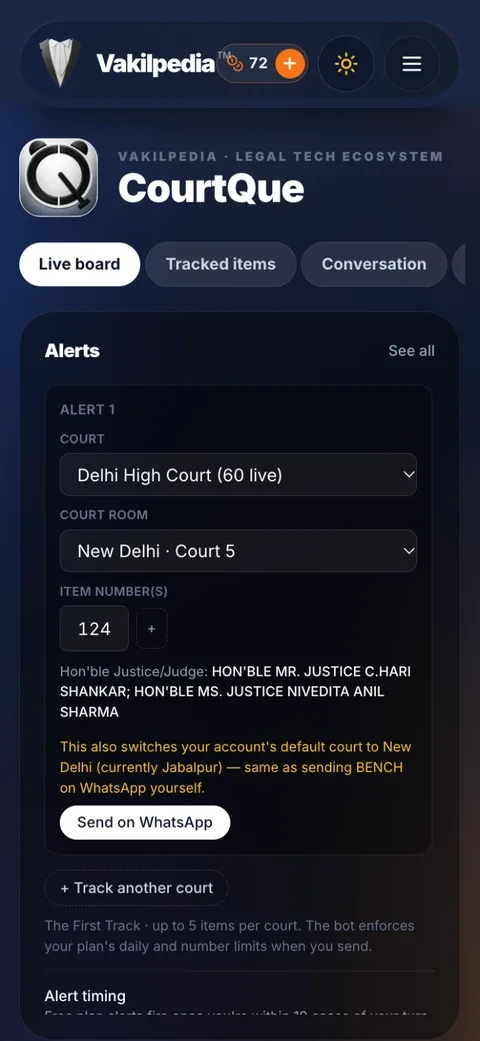
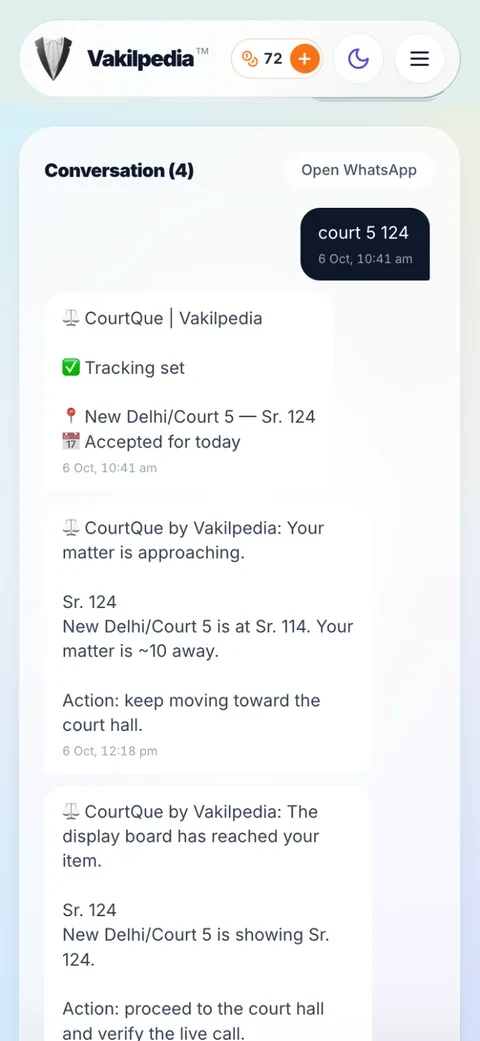
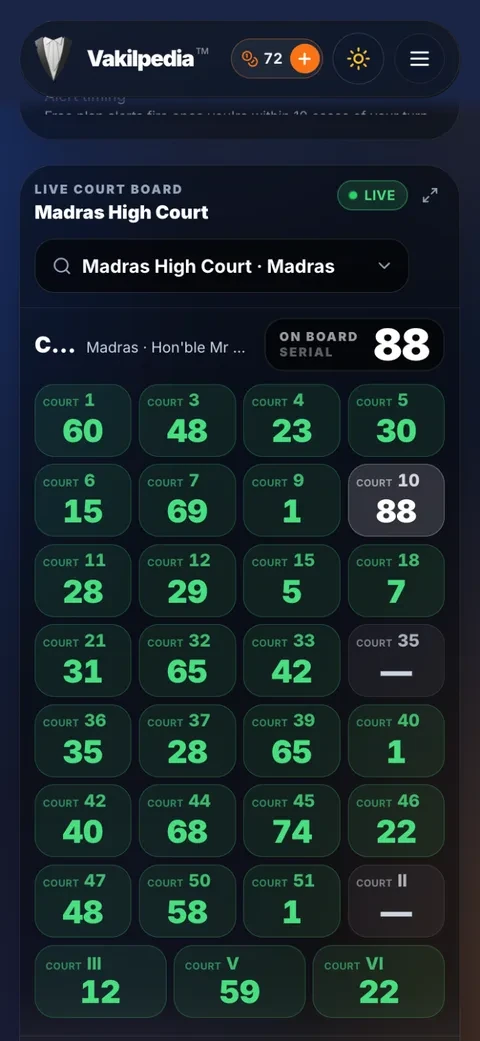
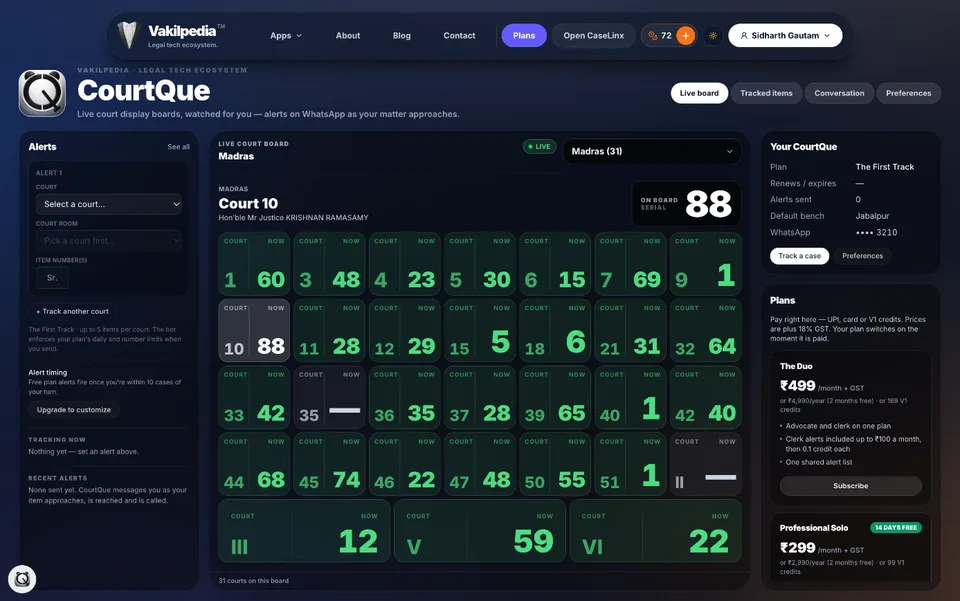
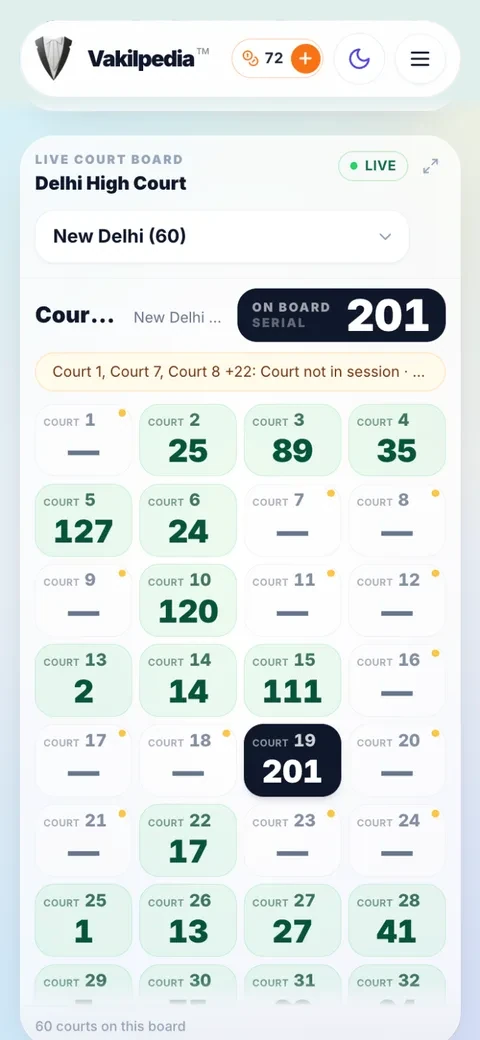
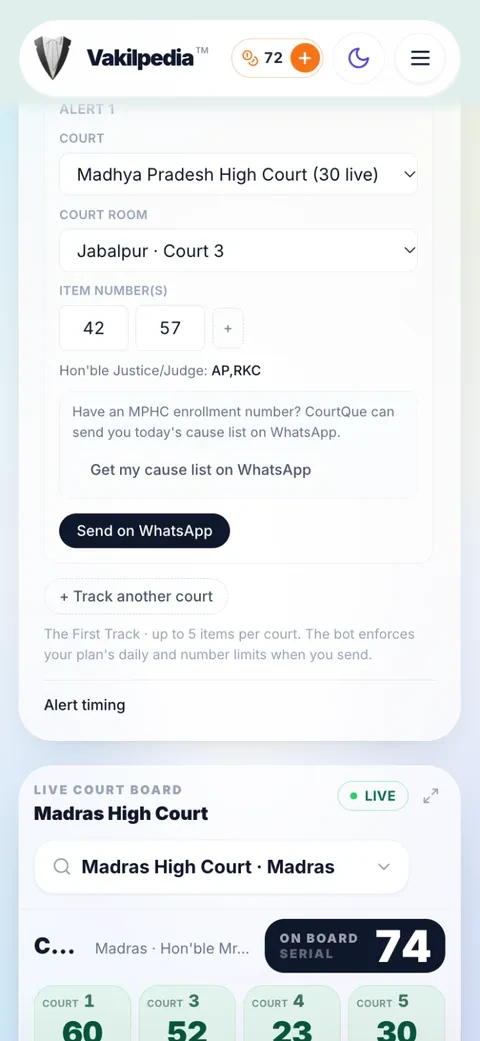
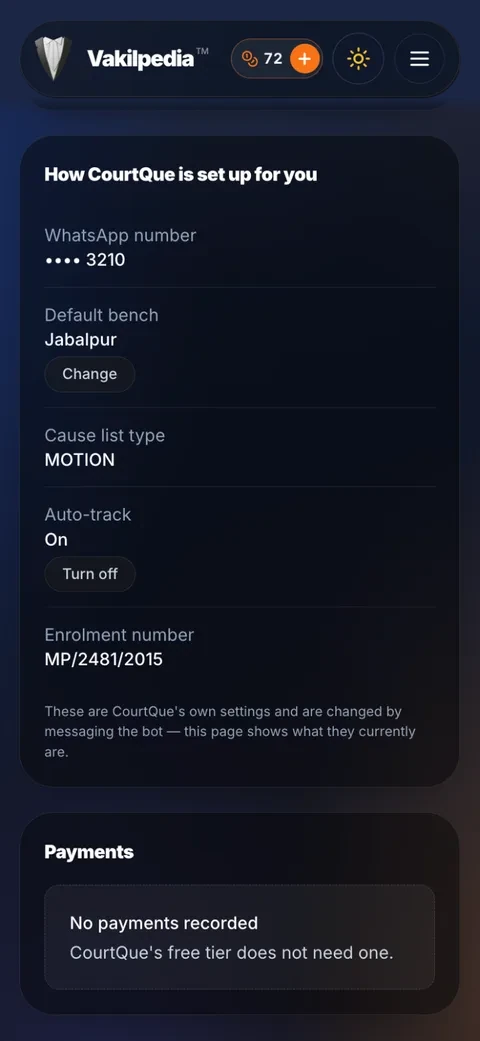
CourtQue shows information that the courts themselves make public on their display boards: the court room, the item being heard, the presiding judge and any notice the court posts. It does not alter that information, does not rank it, and stores nothing about your matters beyond what you send it. Boards are published at the court's discretion: they can change, pause or go offline without notice, and a court may sit differently from what its board shows.
Indian courts work on the principle of open justice: proceedings, and what courts publish about them, are public unless a court restricts publication or a law prohibits it. Under Section 52(1)(q)(iv) of the Copyright Act, 1957, reproducing or publishing a judgment or order of a court is not an infringement of copyright unless that court has prohibited it. Under Section 3(c)(ii) of the Digital Personal Data Protection Act, 2023, that Act does not apply to personal data made publicly available by a person who is under a legal obligation to make it public. The Supreme Court held in R. Rajagopal v. State of Tamil Nadu, (1994) 6 SCC 632, that publishing what is part of the public record, including court records, does not violate the right to privacy. If a court has restricted publication of anything CourtQue shows, or you want something removed, write to info@vakilpedia.com and we will act on it promptly.
CourtQue is a convenience tool only. It is not a substitute for the official court record, the cause list, or your own presence and verification — always rely on official court data and your counsel's advice before acting on an alert.